
Why it Matters
For more than a year, we have been working with the award-winning and recently retired Consultant Cardiologist and former Head of Cardiology, Dr Phil Keeling, on what began as The Heart Campaign. As more information has come to light, it has become increasingly clear that the issue extends far beyond cardiology.
Today, our campaign has become Save Torbay Hospital because what is now at stake is not just one department, but the future of our entire acute hospital.
Dr Keeling remains passionate about protecting Torbay Hospital and preserving its status as a fully functioning acute district general hospital serving the people of Torbay, South Devon and the many visitors who come to our area each year.
The Devon Integrated Care Board (ICB) and Torbay and South Devon NHS Foundation Trust have published information about their plans and their vision for the future. However, after speaking at length with Dr Keeling and a number of senior consultants who continue to work within the hospital, it is evident that there is another perspective which deserves to be heard. As the late Queen Elizabeth II famously observed, “recollections may vary”.
The consultants who have shared their concerns have requested anonymity because they fear professional repercussions. Their message, however, is remarkably consistent.
This Is No Longer Just About Cardiology
The original campaign focused on proposals that threatened Torbay Hospital’s emergency cardiac services. Those concerns have not gone away. Instead, consultants now believe those proposals formed part of a much wider strategy to centralise acute NHS services across Devon.
Their fear is not that Torbay Hospital will suddenly close. Rather, they believe it risks being gradually downgraded, one service at a time, until it is no longer able to function as a fully acute hospital.
That would fundamentally change healthcare for hundreds of thousands of people.

Decisions Are Being Made Without Meaningful Clinical Input
One of the strongest concerns expressed by senior clinicians is how decisions are now being made. Consultants say that major changes are increasingly determined through ‘One Devon’ or ‘Pan Devon’ programmes, driven primarily by management and financial pressures rather than by frontline clinicians.
They describe a culture where doctors are informed after decisions have effectively been taken, rather than being involved in developing them. These are not administrative decisions. They are decisions that affect emergency care, surgery, cancer treatment, maternity services and the future of healthcare across South Devon.
Many clinicians believe medical expertise is being sidelined by managerial decision-making.
Why Pathology Matters to Everyone
Many people may never have heard of pathology, but it is one of the most important departments in any hospital. Every day it provides:
Blood tests.
Tissue analysis following biopsies.
Cancer diagnoses.
Infection testing.
Emergency laboratory services.
Virtually every department in the hospital depends upon pathology. Consultants are concerned that moving elements of these services to Exeter could create delays affecting emergency medicine, surgery, orthopaedics, intensive care and cancer treatment.
Their fear is simple.
If the services that support an acute hospital are gradually removed, the hospital itself can no longer operate as an acute centre.
What Else Could Be At Risk?
Consultants have also expressed concern that further services could eventually be centralised elsewhere. Among those reportedly discussed are:
Obstetrics and Gynaecology.
Paediatric Surgery.
Maxillofacial Surgery.
Emergency inpatient services.
Some consultants have even reported hearing suggestions that Torbay’s Accident & Emergency Department could eventually operate only during weekday daytime hours. If that were ever to happen, the consequences would be enormous. Patients requiring emergency treatment would face longer journeys. Ambulance crews would spend far more time transporting patients to Exeter instead of responding locally. Emergency response times across South Devon could increase significantly.
The knock-on effects would be felt throughout the entire healthcare system.
Recruitment Is Already Becoming More Difficult
Consultants are also worried about the hospital’s future ability to recruit staff. They report hearing that trainee doctors are being discouraged from applying for training posts at Torbay because of uncertainty about the hospital’s future. If fewer trainees come to Torbay today, fewer consultants are likely to choose to work here tomorrow. That creates a damaging cycle which becomes increasingly difficult to reverse.

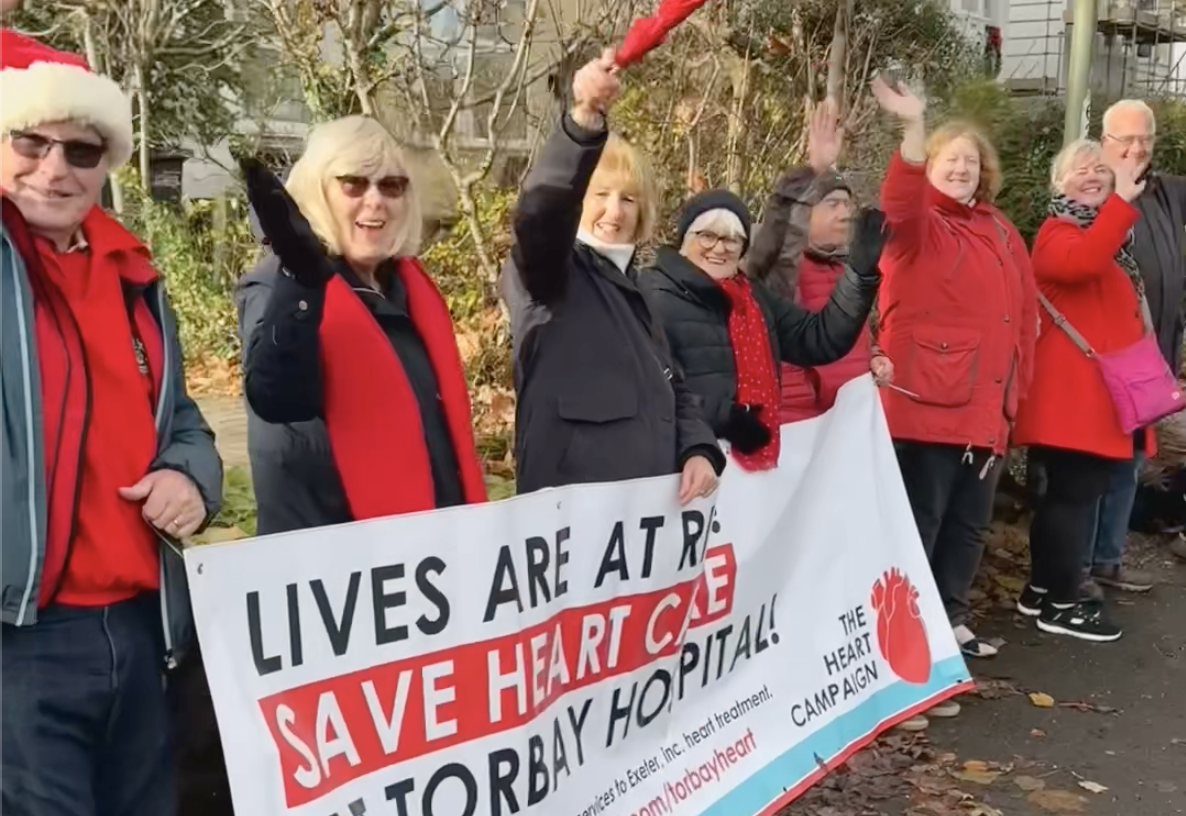
This Is About Our Community
Torbay Hospital serves far more than Torbay. Its catchment stretches across South Devon, from East Prawle to Exeter, and supports a resident population of hundreds of thousands, together with millions of visitors over the course of a year.
People living in Brixham, Paignton, Torquay, Dartmouth, Totnes, Newton Abbot, Teignbridge, the South Hams and surrounding communities all rely on having rapid access to acute hospital care close to home.
When someone suffers a heart attack, stroke, major injury or serious illness, every minute matters. The difference between receiving treatment locally and travelling many additional miles can literally be the difference between life and death.
We Need Transparency
The clinicians raising these concerns are not opposed to change. They recognise the enormous financial and workforce pressures facing the NHS. What they are asking for is transparency. They believe the public deserves to see the full clinical evidence, financial modelling and integrated impact assessments before decisions are made that could permanently alter healthcare across South Devon.
Communities should not discover that services have disappeared only after the decisions have already been taken.
This Is Why the Campaign Has Changed
This is why the The Heart Campaign has evolved into Save Torbay Hospital. The issue is no longer about protecting one department. It is about protecting the future of an entire acute hospital. It is about ensuring that local people continue to receive high-quality emergency and specialist care close to home.
It is about preserving a hospital that has served generations of families across South Devon. Dr Phil Keeling and many of his former consultant colleagues believe there is still time to protect Torbay Hospital.
But that will only happen if our community understands what is at stake and makes its voice heard.
This campaign is not about resisting change for the sake of it. It is about ensuring that decisions affecting the health and safety of hundreds of thousands of people are clinically led, transparent, evidence-based and made with the full involvement of the communities they will affect.